Every Millisecond Counts: How Website Speed is Secretly Shaping Your Bottom Line
Did you know the average human attention span is now just 8.25 seconds—shorter than a goldfish's? In that time, your website has to load and capture a customer's interest. Data shows that a simple 1-second delay can cut conversions by 7%, potentially costing a business earning £10,000 a day over £250,000 a year. In today's digital marketplace, speed isn't just a feature; it's the foundation of revenue, brand trust, and visibility. If your site is slow, you're not just losing patience—you're losing customers.
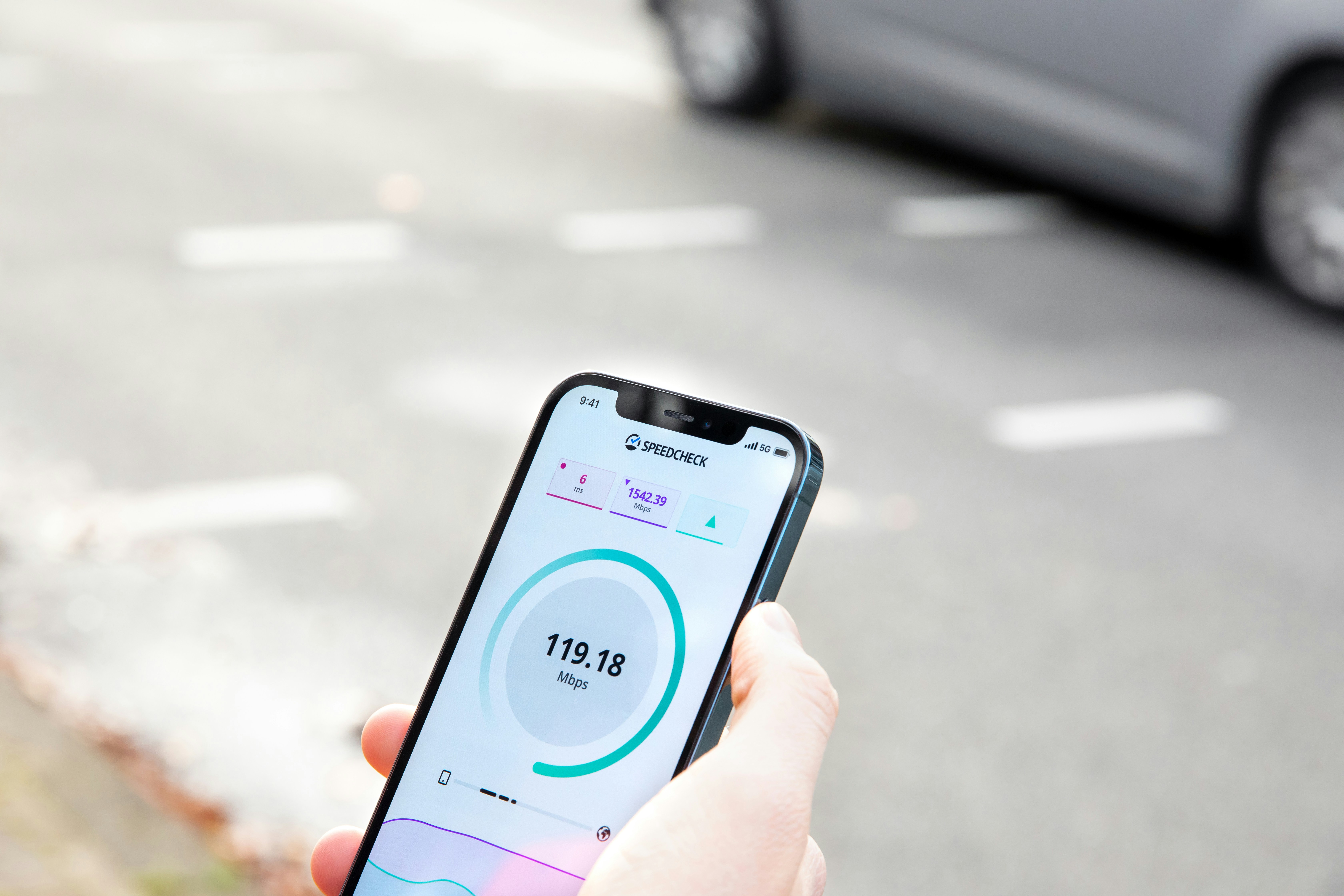
You've been there. You click a link for a product you're excited to buy, only to be met with a blank white screen and a spinning wheel of doom. One second passes. Two. Three. What do you do? If you're like most people, you hit the 'back' button without a second thought and click on the next search result—likely a competitor. This fleeting moment of frustration is more than just a minor annoyance; it's a daily transaction that costs UK retailers an estimated £1.73 billion in lost sales each year.
In the modern digital economy, speed isn't a "nice-to-have" feature; it's the bedrock of the entire customer experience. It's the first promise your brand makes to a visitor, and breaking it has severe consequences. The reason for this intolerance is rooted in a dramatic shift in human psychology. The average human attention span has plummeted from a leisurely 12 seconds in the year 2000 to just 8.25 seconds today. To put that in perspective, scientists credit the common goldfish with a 9-second attention span. This isn't just a quirky fact; it's the fundamental psychological context that dictates the rules of online engagement. Your business has less time to make an impression than a goldfish.
This article will dissect the critical, data-backed reasons why your website's load time is one of the most powerful levers for driving revenue, building brand loyalty, and dominating search rankings. We will explore the psychology of impatience, quantify the exact financial cost of every second of delay, and reveal how speed has become a silent, and incredibly persuasive, ambassador for your brand.
The Three-Second Ultimatum: Inside the Mind of the Modern Consumer
To understand why speed is so critical, one must first understand the mind of the modern online user—a mind rewired for instant gratification. The expectation for digital immediacy is no longer a preference; it's a demand.
The Expectation of Instant Gratification
The data paints a stark picture of a user base with virtually no patience. Studies show that 47% of consumers expect a webpage to load in 2 seconds or less, a benchmark that leaves little room for error. The consequences of failing to meet this expectation are immediate and brutal: 40% will abandon a website that takes more than 3 seconds to load. For the ever-growing segment of mobile users, the standards are even more stringent. A staggering 53% of mobile site visitors will leave a page that takes longer than three seconds to load. This isn't a conscious decision-making process; it's a deeply ingrained, almost reflexive, response conditioned by the fastest experiences the web has to offer.
The Psychology of Waiting: Stress, Frustration, and Loss of Control
Waiting is not a passive activity for the human brain. Decades of research in human-computer interaction have established that a wait of longer than 2 seconds is enough to break a user's concentration and disrupt their "flow of thought". When a user is forced to wait, it triggers negative emotional responses. They feel powerless and frustrated, emotions that are then subconsciously transferred to the brand responsible for the delay.
A revealing mobile stress study measured the physiological responses of users interacting with websites. It found that delays as small as 500 milliseconds—half a second—were enough to measurably increase user stress levels. This stress isn't just a fleeting feeling; it becomes a core part of the user's memory of the interaction, directly associating the brand with feelings of anxiety and frustration.
The Spillover Effect: From "Slow Website" to "Untrustworthy Brand"
Perhaps the most damaging aspect of a slow website is that users do not compartmentalise their frustration. They don't think, "This website's server is poorly configured." They think, "This company is unprofessional and doesn't value my time." This psychological leap is known as the spillover effect, where a negative experience in one area (performance) taints the perception of all other areas (product quality, customer service, brand integrity).
The same mobile stress study powerfully illustrated this phenomenon. When participants were asked to describe their experience with a slow site, they used adjectives that had nothing to do with speed. The site was described as "boring," "clunky," "tacky," and "hard to navigate". The word cloud generated from user feedback for the slower site contained nearly three times more negative descriptors than the one for the fast site.
This demonstrates that a website's performance is not merely a technical metric; it has become a fundamental brand attribute, as influential as a logo or a mission statement. A slow website actively communicates negative brand values: carelessness, inefficiency, and a lack of respect for the customer. This damage to brand equity can be far more costly and difficult to repair than the initial investment in performance optimisation. Marketing departments may spend millions on campaigns to build a perception of quality and reliability, but a 5-second page load can undermine that entire effort by sending a contradictory—and far more visceral—message to every single visitor.
From Clicks to Cash: Quantifying the Financial Impact of Page Speed
While the psychological effects are profound, the financial consequences of slow page speed are direct, measurable, and staggering. Every millisecond of delay can be translated into lost revenue, making website performance one of the most critical key performance indicators (KPIs) for any online business.
The Bounce Rate Avalanche: Your Leakiest Bucket
In simple terms, the "bounce rate" is the percentage of visitors who land on your website and leave after viewing only one page. It is the purest digital signal of a poor first impression. The correlation between page load time and bounce rate is not a gentle slope; it's a cliff.
Data from Google shows that the probability of a user bouncing increases by 32% as page load time goes from just 1 second to 3 seconds. This probability soars to 90% at the 5-second mark and a catastrophic 123% at 10 seconds. To put this in physical terms, imagine 100 people walking into your retail store. If they have to wait 5 seconds just to get through the door, 90 of them will immediately turn around and leave. That is precisely what a high bounce rate is doing to your digital storefront every single day.
The Conversion Catastrophe: Where Sales Go to Die
For a business, the most important metric is the conversion rate—the percentage of visitors who complete a desired action, such as making a purchase or filling out a lead form. Every single second of delay actively erodes your ability to convert a visitor into a customer.
Multiple studies confirm this direct, negative relationship. Research from tech agency Portent found that website conversion rates drop by an average of 4.42% with each additional second of load time (within the first five seconds). A foundational study by the Aberdeen Group concluded that a 1-second delay in page response results in a 7% reduction in conversions. In real terms for a UK business, this means that if your site typically earns £10,000 a day, a one-second delay could cost you £250,000 in lost sales over a year.
Conversely, the return on investment for even marginal speed improvements is enormous. A landmark collaborative study by Deloitte and Google discovered that improving load time by a mere 0.1 seconds—a tenth of a second—boosted conversions by an incredible 8.4% for retail sites and 10.1% for travel sites. This proves that small, incremental optimisations can yield massive financial returns.
Real-world case studies provide undeniable proof:
UK-based e-tailer Glasses Direct found that their conversion rate peaked at a two-second load time, dropping by 6.7% for each additional second of delay.
Telecoms giant Vodafone, a major UK brand, saw an 8% increase in sales after focusing on optimising its Core Web Vitals, Google's key speed metrics.
Globally, Amazon calculated that every 100-millisecond delay could reduce sales by 1%.
Beyond the Conversion: Impact on Average Order Value (AOV)
The financial benefits of speed don't stop at securing the sale. A fast, fluid user experience encourages customers to browse more products and, ultimately, spend more money. The same Deloitte study that revealed the 8.4% conversion lift for retail also found a 9.2% increase in average order value from that same 0.1-second speed improvement. A fast site instils confidence and removes friction, making users more comfortable exploring your catalogue and adding more items to their cart before checking out.
To crystallise the financial stakes, consider the following model which synthesises data from multiple sources to illustrate the compounding cost of delay on a business with £100,000 in potential monthly revenue.
Load Time (seconds) | Increase in Bounce Rate Probability (vs. 1s) | Cumulative Loss in Conversions (Approx.) | Potential Revenue Lost (from £100,000) |
|---|---|---|---|
1s | Baseline | Baseline | £0 |
2s | +9% | -7% | -£7,000 |
3s | +32% | -14% | -£14,000 |
4s | +60% (est.) | -21% | -£21,000 |
5s | +90% | -28% | -£28,000 |
The Unseen Battlefield: How Speed Influences Brand Loyalty and Google Rankings
The impact of page speed extends far beyond a single session or transaction. It plays a crucial, long-term role in building brand loyalty and determining your visibility in the world's most important marketplace: Google search results.
Building (or Breaking) Trust in Milliseconds
A fast, seamless digital experience is a powerful, non-verbal signal of competence and professionalism. It builds user confidence and fosters trust in your brand. Conversely, a slow, clunky experience breeds distrust and frustration. The long-term cost of this negative first impression is immense. Research shows that 88% of online consumers are less likely to return to a site after a bad experience. A slow-loading page doesn't just represent one lost sale; it often means a customer lost for life.
On the other hand, a fast site encourages deeper engagement, which is a key ingredient for building brand loyalty. One study found that users on sites loading in 2 seconds visit an average of 5.6 more pages than those on sites that take 8 seconds to load. This increased interaction—more products viewed, more articles read, more features explored—creates more opportunities to demonstrate value and solidify a positive relationship with the customer.
Winning the Google Race: Speed as a Critical SEO Factor
Google's primary objective is to provide its users with the best possible results for their queries. A huge part of that "best" experience is getting them relevant information quickly. For this reason, Google has been unequivocal: page speed is a confirmed ranking factor for both desktop and mobile searches. All other factors being equal, a faster competitor will outrank a slower one.
To measure this, Google developed a set of metrics called Core Web Vitals (CWV), which are designed to quantify the real-world user experience of a page. These are:
Largest Contentful Paint (LCP): Essentially, "How long does it take for the main, most meaningful content on the page to become visible?" This measures perceived loading speed.
First Input Delay (FID): This metric asks, "When a user first interacts with the page—by clicking a button or a link—how long does it take for the browser to respond?" This measures interactivity and responsiveness.
Cumulative Layout Shift (CLS): This quantifies visual stability by asking, "Does the page layout jump around unexpectedly as it loads?" A low CLS score means a stable, non-frustrating visual experience.
The importance of these metrics is magnified by Google's Mobile-First Indexing policy. This means Google predominantly uses the mobile version of a website for indexing and ranking. Given that mobile connections are often less stable and the average page load time on mobile is a sluggish 8.6 seconds, a fast, optimised mobile site represents a massive competitive advantage.
This interconnectedness creates a powerful, self-reinforcing positive feedback loop. A faster website provides a better user experience. This improved experience leads to better engagement signals, such as lower bounce rates and longer time spent on the site. Google's algorithm interprets these positive signals as proof of a high-quality, relevant page and rewards it with higher search rankings. Higher rankings, in turn, drive more organic traffic to the site. Because the site is fast, this new influx of traffic converts at a higher rate, improving the ROI of all marketing efforts, from SEO to paid advertising. In this ecosystem, speed is the foundational catalyst that makes everything else work better.
What's Pumping the Brakes? A Brief Look at Common Speed Bumps
Understanding why a website is slow is the first step toward fixing it. While the technical details can be complex, the culprits often fall into a few common categories, empowering business owners to have more productive conversations with their development teams.
The Weight of Your Pages
The most common issue is excessive "page weight"—the total file size of all the resources (images, scripts, fonts) that a browser must download to render a page.
Unoptimised Images: This is frequently the single biggest offender. High-resolution images saved with large file sizes can dramatically slow down a site. Proper image compression, resizing images to their actual display dimensions, and using modern, efficient formats like WebP are essential.
Bloated Code & Scripts: Heavy JavaScript and CSS files, often added by numerous plugins, third-party marketing tools, analytics tags, and ad network code, can add significant weight and processing time to a page. Each script is another file to download and execute, creating delays.
Your Website's Foundation: Server and Hosting
The quality of your web hosting is a primary factor in your site's performance. A slow or overloaded server, which is common with cheap, shared hosting plans, will have a slow response time. This creates a bottleneck before your page's files even begin to download, guaranteeing a slow experience for the user.
Inefficient Resource Handling
Even with a light page and a fast server, a site can be slow if it handles resources inefficiently. This includes issues like a lack of browser caching, which forces a returning visitor to re-download all the site's assets instead of using a locally stored copy. It can also involve making too many separate HTTP requests to the server to fetch dozens of small files, a process that can be slow and inefficient.
Conclusion: It's Time to Join the Fast Lane
The evidence is overwhelming and conclusive. Website speed is not a technical afterthought; it is a critical driver of user psychology, a direct lever for conversions and revenue, a cornerstone of brand integrity, and a non-negotiable factor for SEO success. In the modern digital landscape, slow is simply no longer an option.
The decision to invest in website performance should not be viewed as a cost but as one of the highest-ROI initiatives a business can undertake. The data clearly shows that the cost of inaction—measured in abandoned carts, lost sales, diminished search rankings, and a damaged brand reputation—is far greater than the investment required to optimise for speed.
Don't guess—test. Your first step on the journey to a faster, more profitable website is to understand your current performance. Use a free tool like Google's PageSpeed Insights to analyse your site today. The report will provide a clear baseline and actionable steps to begin your optimisation. Every millisecond you shave off your load time is a direct investment in a better customer experience and a healthier bottom line.